On view: 14 October 2026 – 13 November 2026
Opened by: 20 perccel a jövőbe (Dávid Andersen, Balázs Lövenberg, Anna Szabó-Kállay)
When the Pioneer 10 space probe embarked on its journey in 1972, it carried with it a gold-anodised aluminium plaque on which humanity sought to present itself to an imagined extraterrestrial civilisation. The plaque’s creators were faced with the task of devising a visual language that might be decipherable to an intelligence entirely unfamiliar to us. Alongside a series of scientific diagrams, the plaque featured two naked human figures. Humanity’s self-representation thus rested on the visible form of the body, as though its structure and proportions possessed a kind of self-evidence that transcended cultural specificity. As though the body were that part of ourselves requiring the least explanation, its recognisability capable of surviving even in the absence of a shared language or common frame of experience. Yet what appears to us as an unequivocally human form may be far from self-evident to an unknown other. The very act of making ourselves visible therefore entails an attempt to imagine the other’s point of view, while also confronting the problem of translation: how might we represent ourselves in such a way that our image remains accessible beyond the perceptual and interpretative frameworks through which we ourselves apprehend the world? For whenever we seek to make something intelligible to another, we inevitably begin from our own assumptions about what that other might be capable of perceiving and how they might come to understand it.
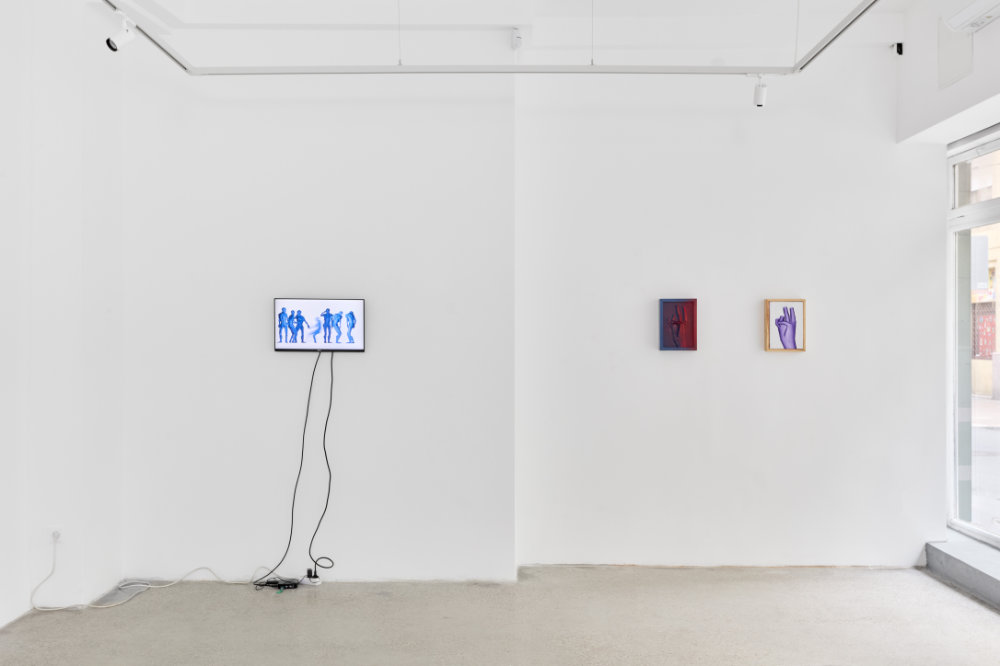
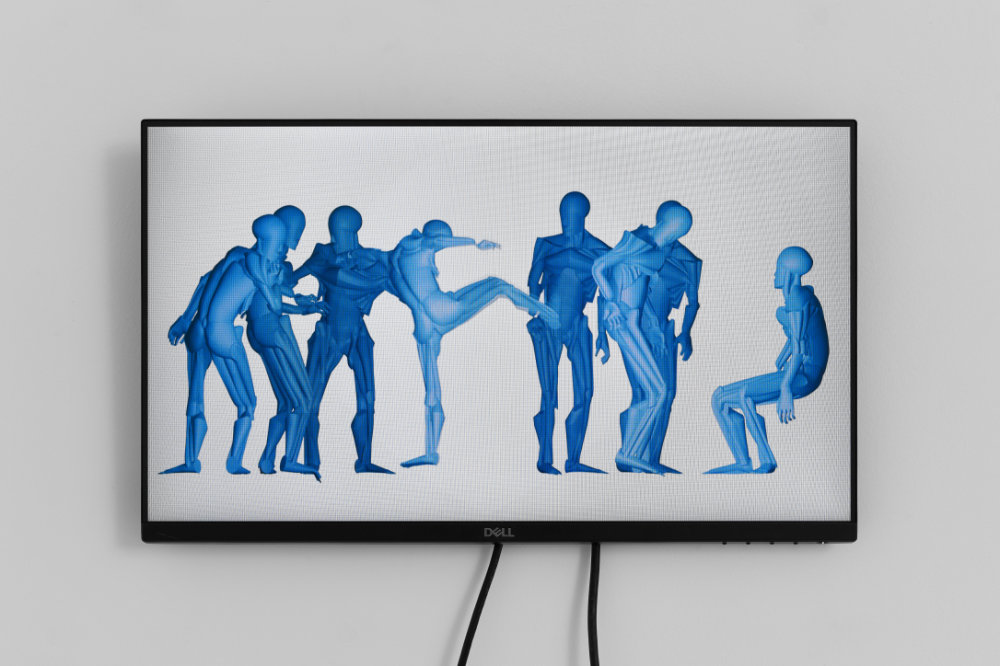
The Human Body, for Machines. The title of Mátyás Fusz’s latest exhibition articulates a similar intention: to make the human body accessible to an other fundamentally different from ourselves, although in this instance the addressee is a very real technical process. The dative case establishes an entirely ordinary linguistic relation: we make or show something to someone, or to something. It suggests a gesture of address, along with the assumption that the manner in which something is presented might be adapted to the particular characteristics of its recipient. The body intended for machines thus foregrounds questions of representation and mediation: how can an image produced from a human perspective be transformed so that it becomes legible to a mode of operation fundamentally different from our own? In Fusz’s work, this question takes concrete form at the intersection of painting and digital fabrication technologies, where, within a single creative process, the image is transformed according to divergent rules, procedures, and principles of translation.
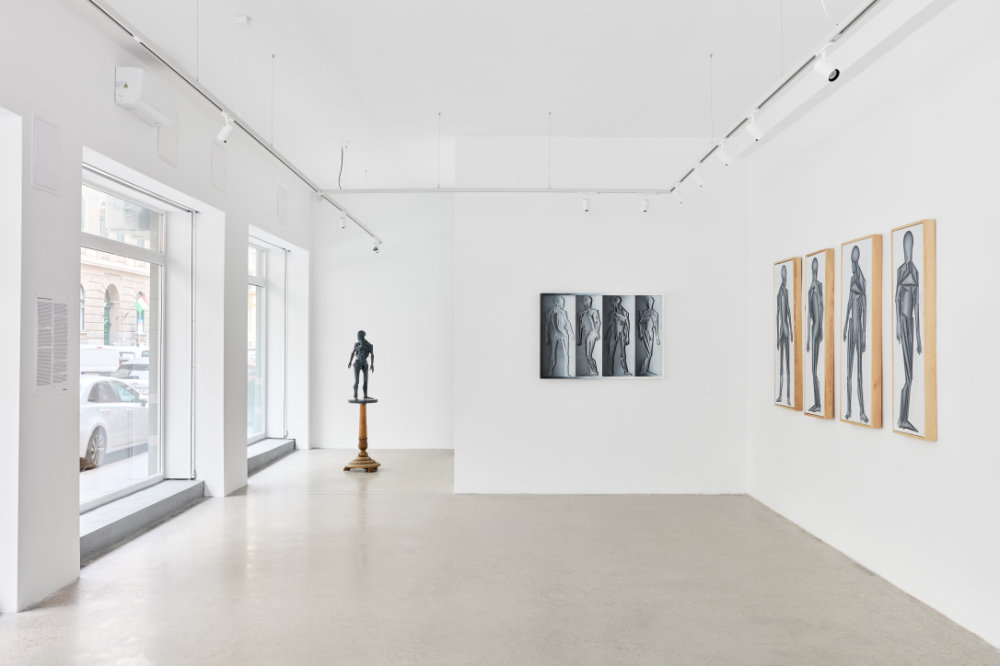
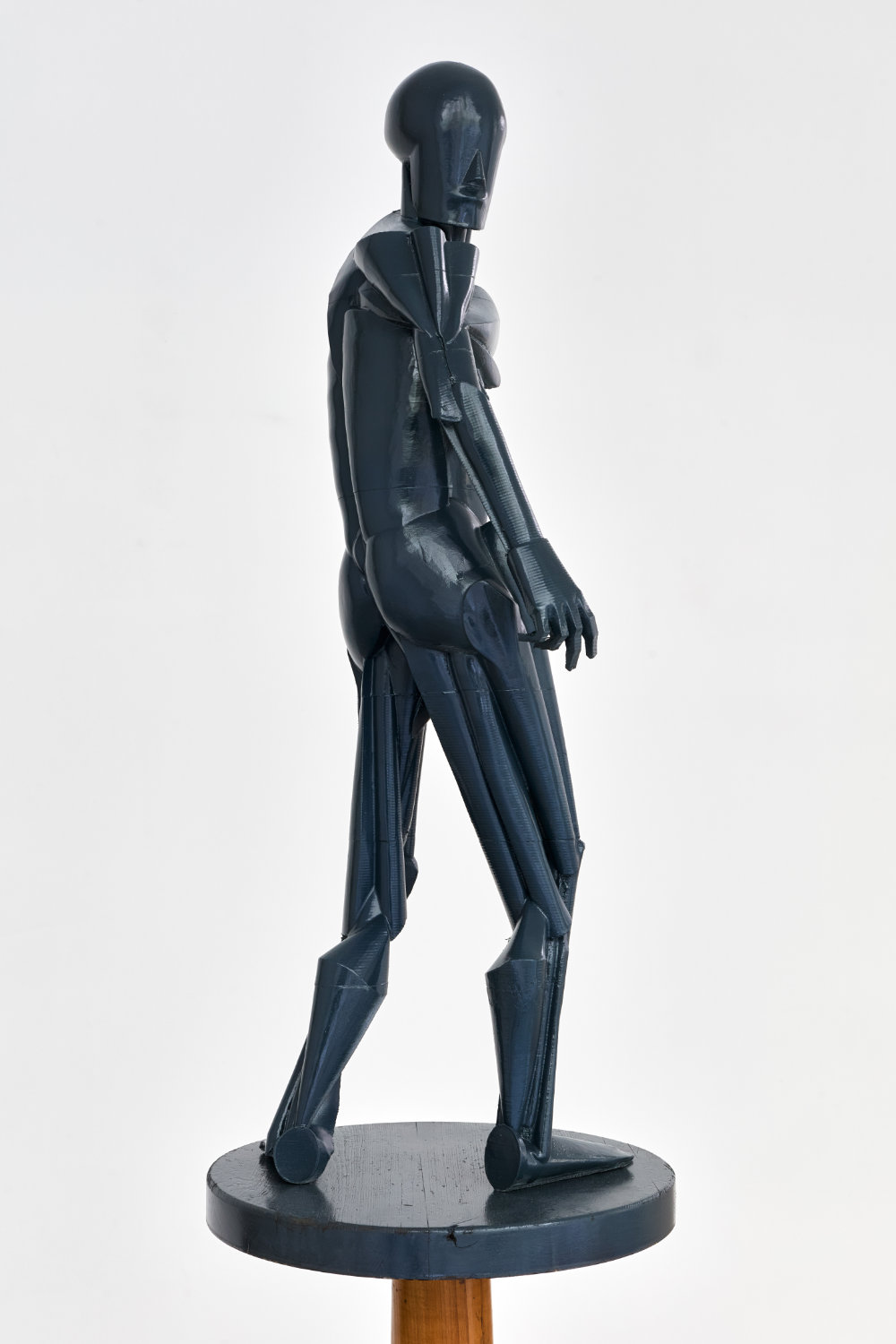
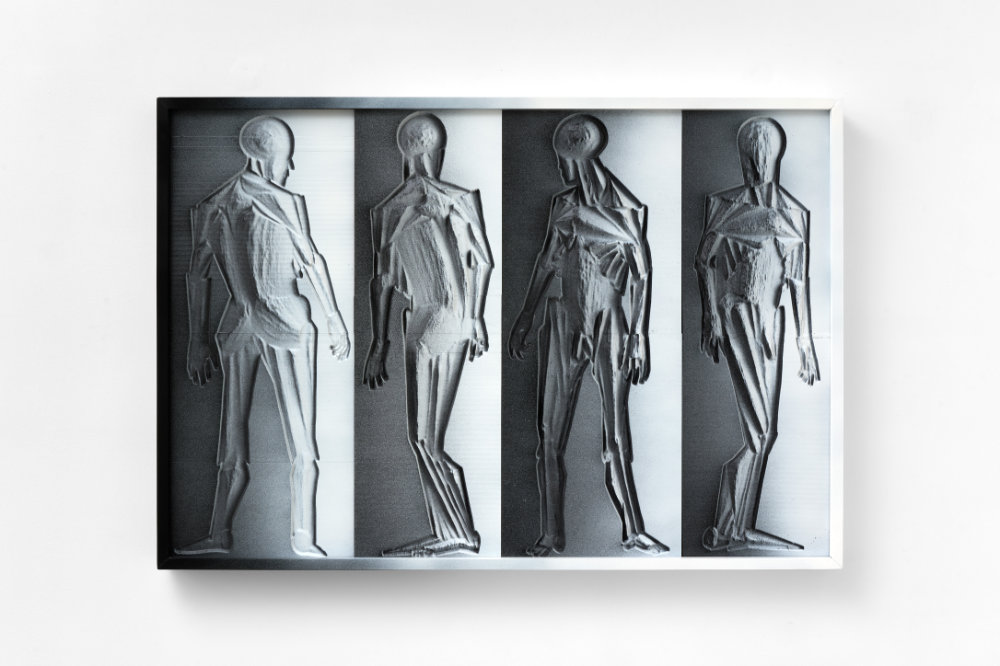
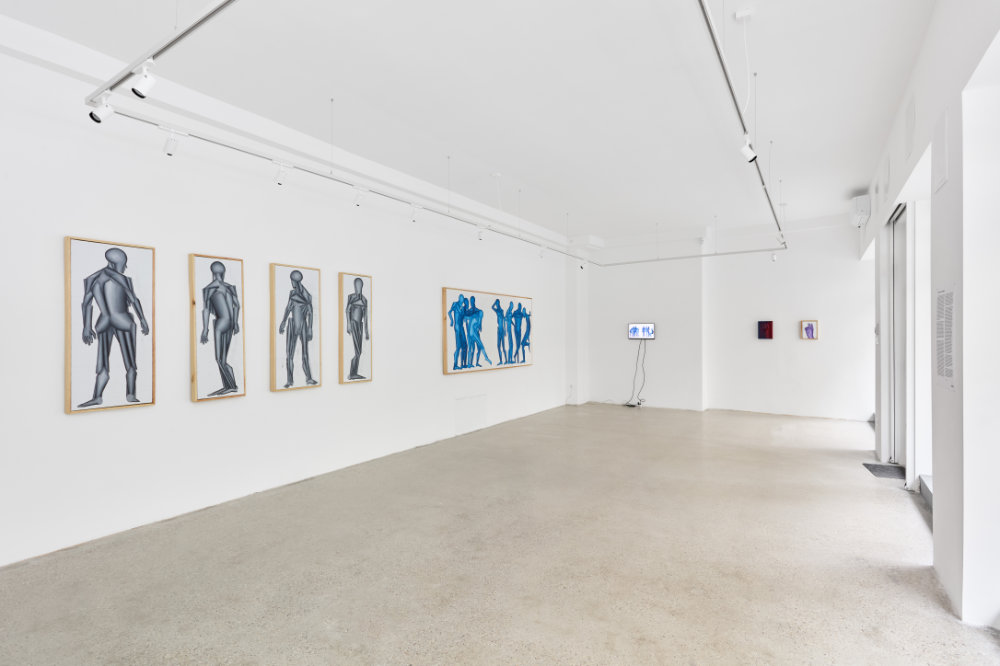
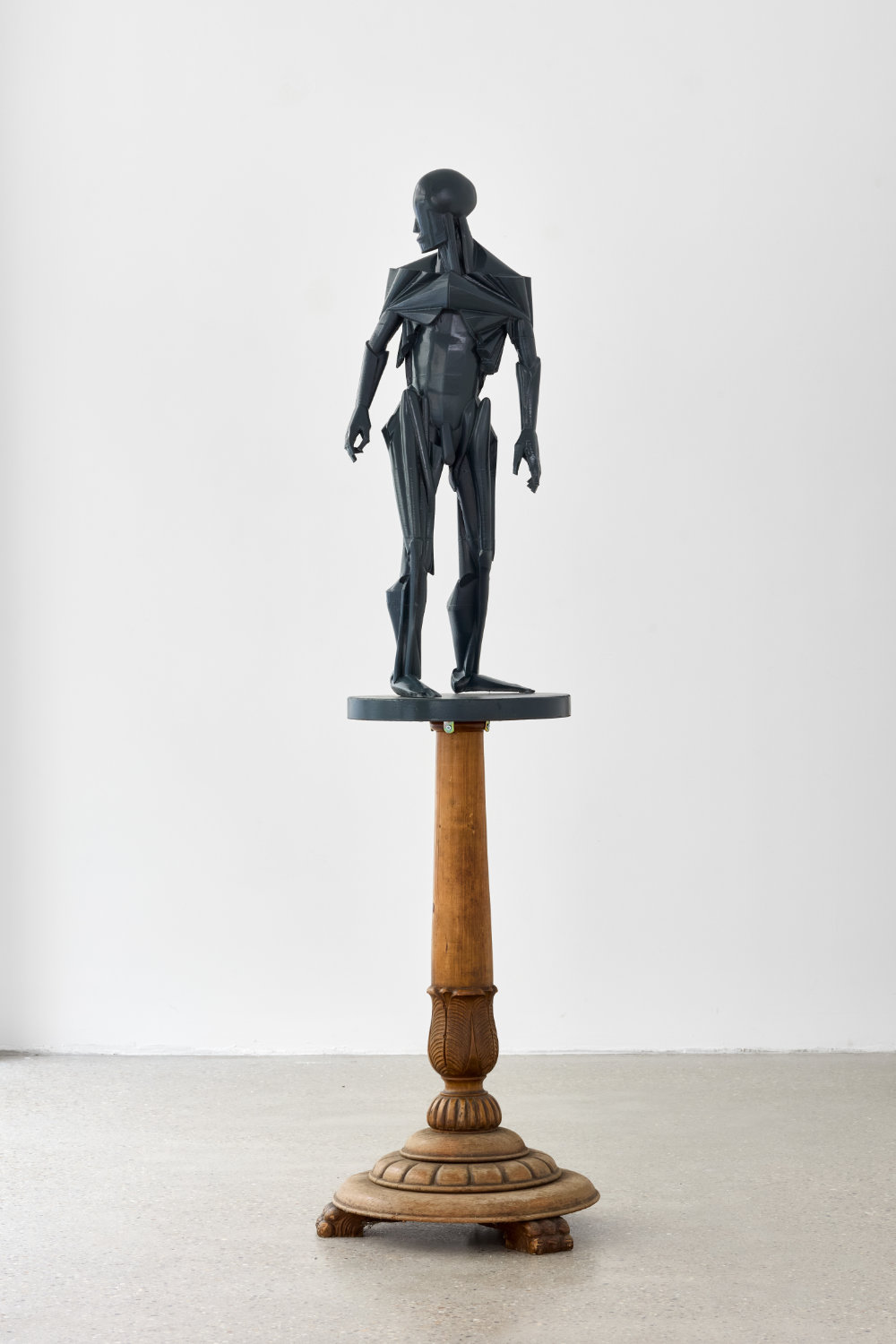
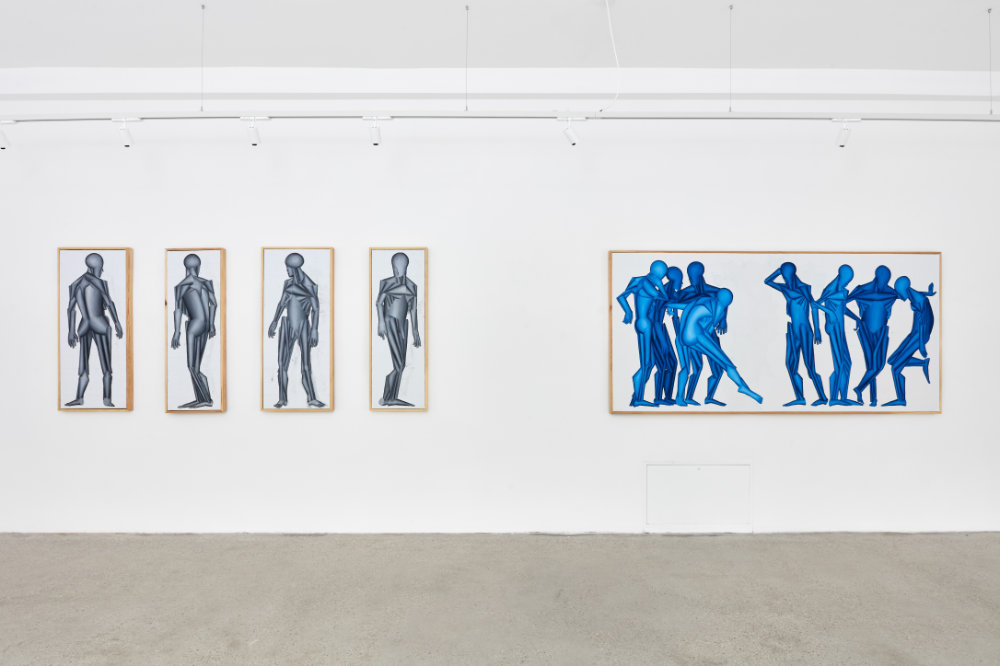
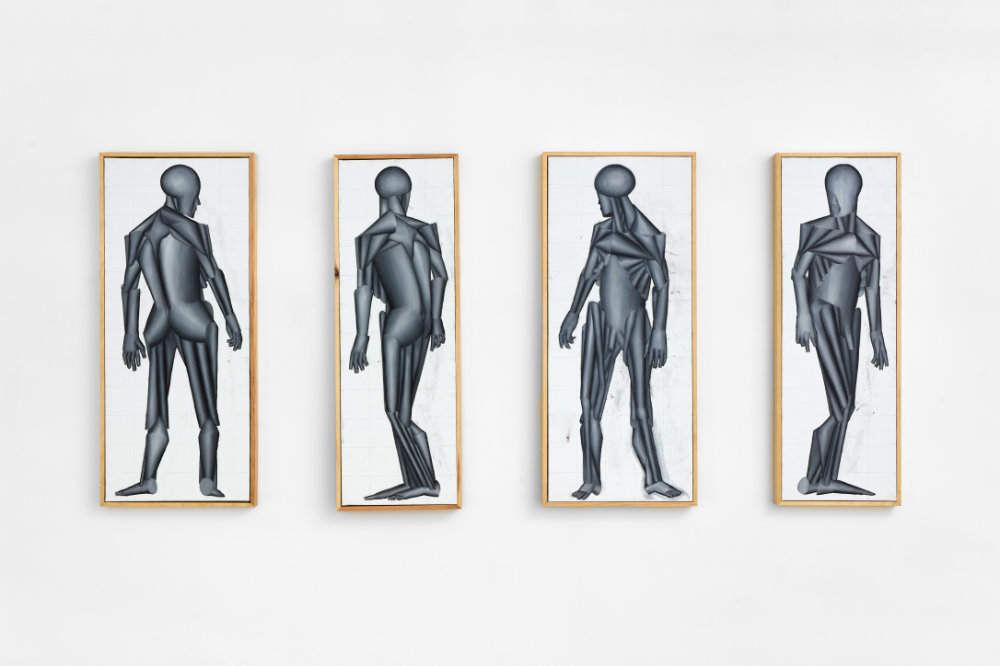
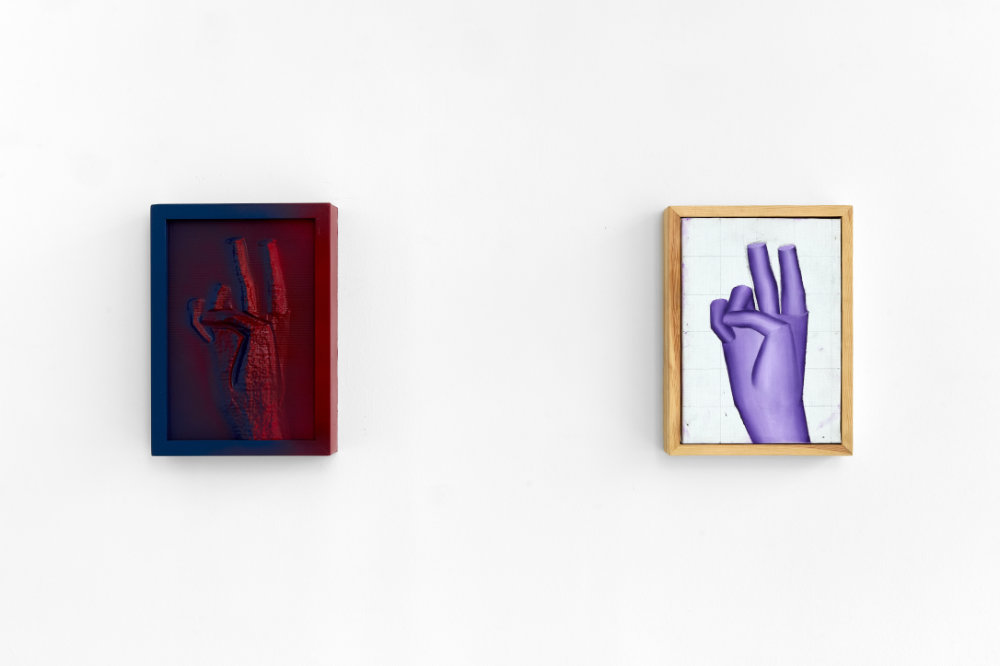
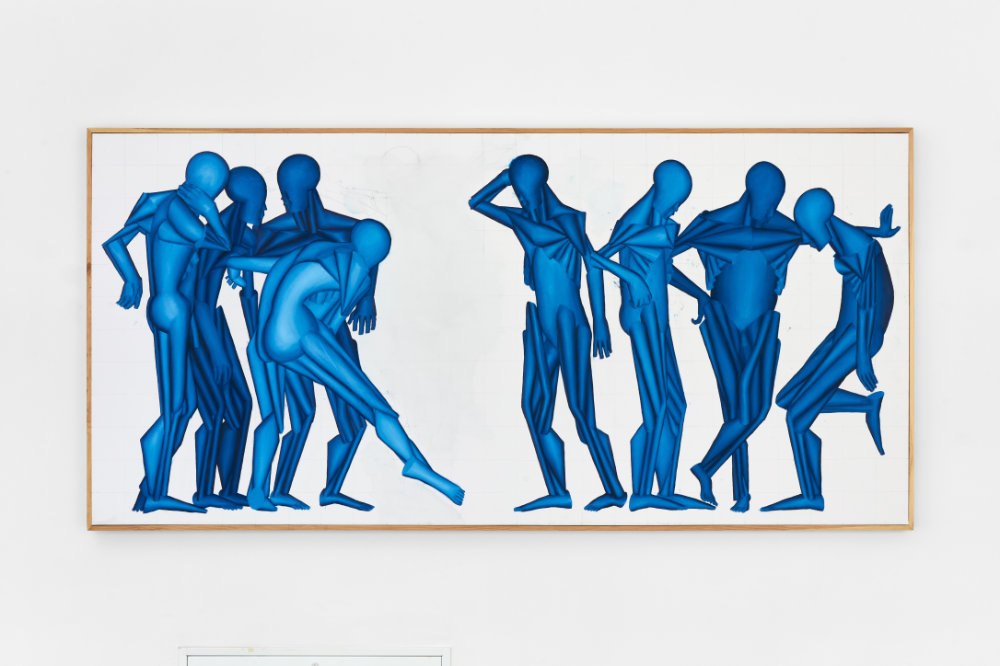
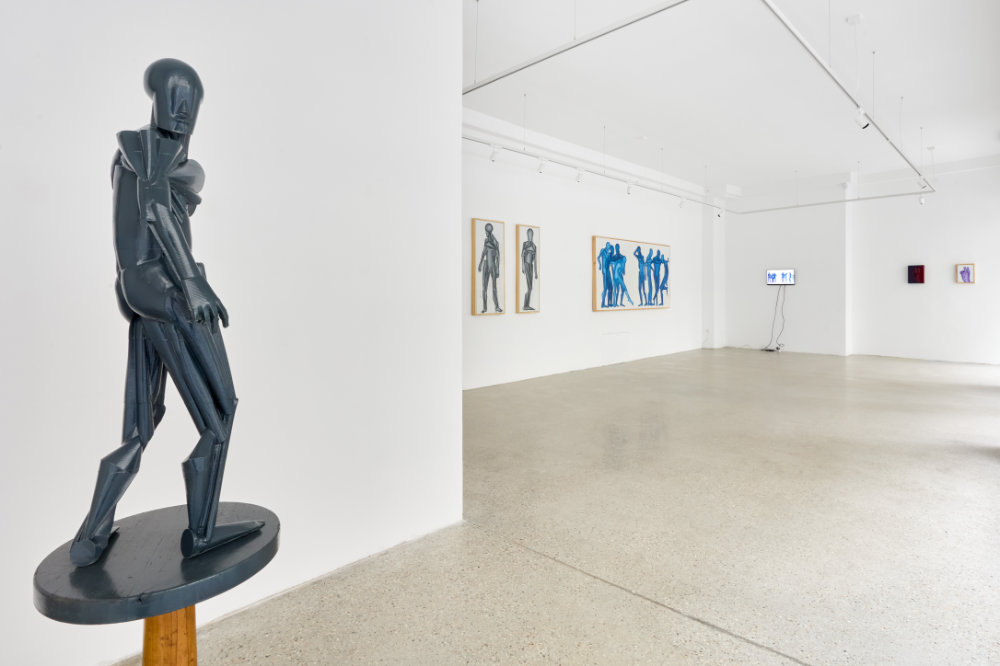
The works on view in the gallery space are the result of a process unfolding through several successive, interdependent stages, beginning with paintings depicting human figures. The figures remain recognisably human, while at certain points departing from the body’s familiar visual representation, establishing a distinctive tension between the familiar and the unfamiliar or uncanny. The paintings are subsequently used as heightmaps for digital processing. A heightmap is a visual data representation in which the brightness values of individual points are assigned corresponding spatial heights. Lighter areas thus correspond to higher elevations, while darker ones map onto lower spatial positions; the transitions between tonal values, in turn, determine the topography of the resulting surface. The three-dimensional geometry defined in this way can then be materialised through 3D printing, taking physical form here as reliefs and a sculpture. The machine-driven process does not recognise the human body depicted, nor does it translate the painting’s meaning into some kind of spatial equivalent. Instead, it processes the image according to numerical relationships, within which a shoulder, a chest, or a limb appears as a set of values relative to other points on the surface. The painting thus gives rise to an object whose form is determined by the source image and which retains traces of its particular characteristics, yet whose spatial relationships are organised according to a different set of principles. Fusz subsequently continues to transform the surfaces of the machine-generated reliefs by hand. The painting therefore becomes data, then a spatial object, and finally the subject of renewed manual intervention. The process thus traces a trajectory from human to machine, and from machine back to human. There is no complete correspondence between image and object. Features that appear insignificant to the human eye may become decisive in machine processing, producing formal characteristics that were not present in the original painting. The deviations, minor glitches, and sometimes unexpected consequences arising from the machine’s operations, in turn, become starting points for further observation. Painting and object thus become open to reinterpretation through one another, while the artist encounters anew something that, although created by his own hand, has in the meantime become partly alien to him. This raises the question of what, precisely, secures the figures’ identity throughout these transformations, and where the unstable boundaries of recognisability lie: which features are necessary for us to continue perceiving them as human bodies? To what extent does the depicted body remain the same when its human identity is of no consequence to the machine that gives it form?
A distinctive feature of Fusz’s artistic practice has long been the particular attentiveness with which he approaches phenomena of human experience that often resist easy apprehension, discovering in what appears self-evident something that warrants further inquiry. He sustains this curiosity through methodological frameworks of his own devising: establishing rules and inventing procedures that trace particular detours of attention, allowing familiar phenomena to reveal themselves from a different perspective. These methods both guide the process of inquiry and create the conditions for its object to resist preconceived notions of what it might be. Attention thus becomes a practice unfolding over time, a patient form of play in which seemingly insignificant details, subtle uncertainties of perception, and connections that appear accidental all acquire significance. The process of coming to know is a slow approach, a form of feeling one’s way forward, in which an almost childlike faith in the world’s intelligibility is tempered by the recognition that no object of observation can ever be exhausted from a single point of view. The incorporation of machine processing gives this attentiveness a new form. For the image to become processable in the desired way, the artist must take the machine’s capabilities and limitations into account while painting. An awareness of the technical procedure’s particularities thus becomes embedded in the artistic process itself, as Fusz is compelled to consider his own work from the perspective of a mode of operation fundamentally different from his own. There is something here of the experimental nature of the search for a common language. The possibility of mutual understanding often depends on finding a shared point of departure, a process that requires those involved to modify their habitual or more comfortable modes of expression. Although the relationship in this instance may appear asymmetrical, Fusz nonetheless approaches the machine as something whose particular mode of operation is worth understanding, and to whose specificities he can adapt his own artistic decisions. Cooperation with the machine, and its emergence as an agent in the creative process, thus also entails a negotiation of terms. Fusz relinquishes a degree of direct control over the work’s development, thereby creating the possibility for formal solutions that could not have emerged through the means of painting alone. Their collaboration unfolds within a delicate balance between control and relinquishment, intention and unforeseen consequences.
The temporality of the works also emerges from this particular mode of artistic engagement. The slowness of painting, the sustained observation of the surface as it evolves, the prolonged search for forms and their gradual refinement, followed by machine processing, lend the works a distinctive rhythm and give rise to an experience of time in which making and observing become difficult to disentangle. Paradoxically, the use of technology thus extends the time devoted to attention, moving away from a productivist conception of time that understands the purpose of technological progress primarily in terms of accelerating work and reducing human effort.
Ultimately, the exhibition as a whole draws attention to the limitations of our own perspective and the relativity of human experience. What appears familiar and self-evident to us may lose its self-evidence when viewed from another perspective, unsettling, in turn, the very certainty with which we orient ourselves towards the world. The question of the primacy of human perception and interpretation thus becomes inseparable from the possibility of approaching the other—a process that may begin precisely with the partial suspension of our habitual frameworks of understanding.
Text: Alexa Major